Field Trips
2025/2026 school year: Online registration for the 2025/2026 school year is now open!
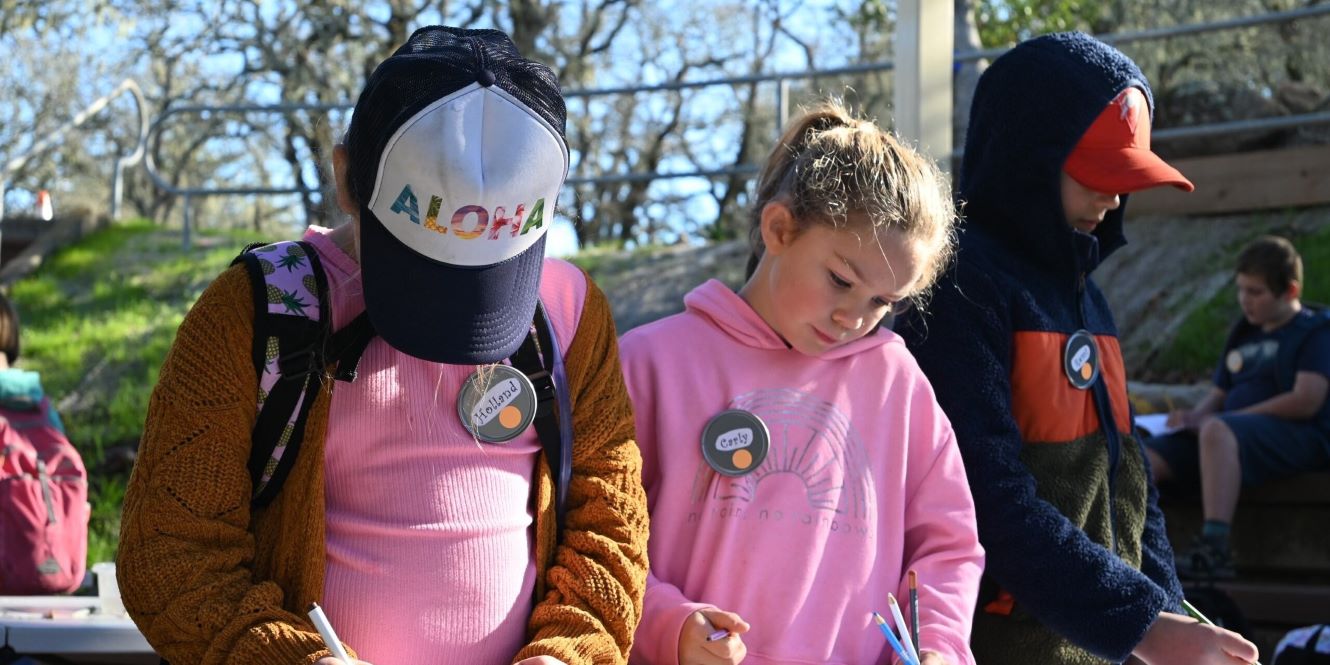
Our parks are your classroom! Get your students outdoors learning about the natural world around them. A wide range of field trips are available at various locations throughout the county. These hands-on, inquiry-based programs reinforce critical Common Core and Next Generation Science Standards.
Field trip descriptions for 2025/2026 school year
Fall Field Trips
Habitat and Home
Spring Lake Regional Park
September – January
TK – 3rd grades
Connect with the native plants and animals that make their homes around Spring Lake. Activities explore the components of healthy habitats and life cycles with a focus on survival and reproduction. Students will participate in science investigations at the Environmental Discovery Center and take a nature hike through oak woodlands. Depending on the grade level, lessons emphasize insects and decomposition, seed dispersal of plants and adaptations of wildlife such as birds.
Rockin' and Recycling
Riverfront Regional Park or Helen Putnam Regional Park
September – January
2nd – 4th grades
Explore the dynamic landscape of Riverfront or Helen Putnam to uncover different ways the earth has changed over short and long periods of time. An interactive hike takes students on a journey through the rock cycle, revealing the forces and patterns of rock formations and making observations on what is found in their local park. Students will also appreciate the importance of renewable resources and recycling products manufactured from minerals and rocks.
Cultural Walk
Tolay lake Regional Park
October – February
4th– 6th grades
Offer your classroom a unique learning experience of our region's rich cultural heritage through the perspective of Native Americans in California. Designed for 4th-6th grades, students will explore past, present and future relationships at Tolay Lake where the Coast Miwok tribe has an incredibly detailed knowledge of natural resources and have passed this knowledge down through generations. Students will directly interact with historians, storytellers and plant stewards through participation in presentations, hands-on activities and educational walks through the park.
Climate Change Agents
Taylor Mountain Regional Park
September – January
5th – 8th grades
Integrate the topics of climate change, health and resilience at this iconic park. Students will learn the science behind Earth’s changing climate, the relationship between human activities and the environment, and ways in which community action reduces impacts locally and globally. While hiking through meadows, woodlands, and urban vistas, students are inspired to be agents of positive change in Sonoma County. Please note – this program includes a recommended pre-visit to your classroom on a preceding Wednesday for Parks staff to introduce concepts.
Spring Field Trips
Only Rain Down the Drain
Spring Lake Regional Park
February - May
TK – 3rd grades
Transform your classroom into drops of rain, take a trip down the storm drain and learn how water flows through creeks, towns, parks and oceans. Students will participate in science investigations at the Environmental Discovery Center and make observations while hiking around Spring Lake. Depending on the grade level, lessons dive into the water cycle, sources and impacts of water pollution, and ways humans can help protect our watersheds.
What's the Buzz?
Sonoma Valley Regional Park
February - April
1st – 3rd grades
Discover the emergence of spring through a hike buzzing with life. Observe seasonal changes while learning about the wildflowers and pollinators that live in an oak woodland ecosystem. Students will explore the relationship between plants and insects as well as the vital role pollinators play in food production.
Weather or Not
Crane Creek Regional Park or Foothill Regional Park
February - May
2nd - 4th grades
Explore the science behind weather and Sonoma County’s microclimates on the meandering trails at Crane Creek or Foothill. After understanding how data is collected, students make their own observations, learn how to identify clouds, and forecast upcoming weather events. Activities demonstrate the function of weather on the physical characteristics of the environment and how life in the park responds to changes in the seasons.
Regeneration after Fire
Foothill Regional Park
February – May
5th – 8th grades
Discover how fire shapes Sonoma County landscapes in a three-hour program at Foothill Regional Park. Explore the interconnectedness of plants and animals with fire and their survival adaptations. Through hands-on activities and guided hiking, students will observe the Kincade Fire’s role in regenerating ecosystem health. Gain a deeper appreciation for nature's resilience and dynamic processes through this educational experience. Please note: This program includes a recommended pre-visit to your classroom on a preceding Wednesday for Parks staff to introduce concepts.
Tidepool Adventure
Pinnacle Gulch Regional Park
March – May
5th – 8th grades
Experience the magic of the tidal ecosystem. Through a moderately strenuous hike to the beach and hands-on exploration, students learn how species are interconnected in complex ecosystems. Practice making observations and finding evidence around the adaptations of coastal inhabitants to changing tides and extreme conditions. Please note – only one classroom (up to 30 students) will be scheduled each day. Available low-tide dates can be found on the registration form.
Registration
Online registration for the 2025/2026 school year is now open! Signing up for a field trip is a multi-step process between the lead teacher and Parks staff. When making your request, please consider which of the above topics, seasons and locations align with classroom needs.
Contact ParkPrograms@sonomacounty.gov to be placed on the teachers newsletter mailing list. Once all dates are reserved, teachers will be placed on the wait list for openings that become available.
Cost
Field trip cost is $7 per student from Sonoma County schools and $9 for students from out-of-county schools.
Scholarships
Scholarships are available on a first-come, first-served basis for Sonoma County schools that have 50% or more students who are considered socio-economically disadvantaged. A limited number of bus stipends are also available to schools. Classes receiving scholarships are responsible for a $25 registration fee per class. If approved, scholarships are paid by the Sonoma County Regional Parks Foundation. Funding is available for each classroom to receive one scholarship per year.
Cancellations
Cancellations must be made one month prior to field trips. Classes that cancel less than a month prior to a field trip are still responsible for the payment of invoices. Extreme rain events or poor air quality cancels.
 Translate